
Disclosure: The author of this review backed Elden Ring: The Board Game on Kickstarter.

Elden Ring: The Board Game
Time to dust off this old blog series and review another licensed board game!
Indeed, the last time I reviewed a big release from Steamforged Games was all the way back in 2017 for their hotly anticipated adaptation, Dark Souls: The Board Game. Now we’re advancing to an even bigger FromSoftware license for this — a cardboard rendition of 2022’s ultimate gaming hit, Elden Ring.
Reviewing Elden Ring: The Board Game is slightly tricky because it has several standalone sets which play independently from each other. Each box contains its own complete adventure, and they can be played sequentially with other sets if players desire a longer campaign. There are smaller expansions which support those base sets as well, but I’ll mainly cover the premier releases, Realm of the Grafted King and Weeping Peninsula for simplicity.
Elden Ring: The Board Game is a cooperative adventure where 1-4 players embody heroes who must traverse a dark fantasy world to complete an epic quest. While the various setups in the scenario books can be played in standalone fashion, the primary draw here is the campaign mode where players begin as lowly weaklings and over the course of multiple sessions, ascend themselves to warriors capable of felling a demigod in battle. No pressure!
Players start their campaign with map cards representing scenarios they can undertake at their current rune level. After every win, players will unlock more map cards featuring more difficult scenarios, with some being entirely optional. Eventually a final boss scenario will unlock at the story’s climax, and players will win their campaign if they can beat it. Players still have the option of taking their developed characters into another campaign afterwards, so the system is surprisingly flexible.
Less flexible perhaps were the Kickstarter edition rulebooks which were defective and falling apart in my box, but aside from their sheer size and the odd typo here and there, learning to play was mostly intuitive. Speaking of the box, there is a wealth of content here. Each set features many cards, tiles, tokens, and of course, beautiful plastic miniatures. The dashboards housing player inventories are made of very thin cardboard (unless you got the fancy ones from Kickstarter), but you’ll probably run out of table space regardless because this game is BIG.
Elden Ring: The Board Game features card-based combat with no dice chucking aspects of any kind. The system works well, as it features simple rules for moving and attacking enemies on a grid, with unique equipment and character class abilities spicing things up as the campaign develops. Learning all the different attack symbols and enemy behaviours will take time, but the cooperative flavour is good as players build personal decks and coordinate attack plans together. Combat is about discovering your character’s strongest plays and building around them. Players do this by equipping and upgrading weapons as well as attribute cards determining both attack strength and the chances of avoiding danger when exploring.
Getting runes always feels good. Players will want to complete every side quest to collect more, and what’s better is that every character has considerable room to grow, with players likely still tweaking their gear until the final encounter. Collecting runes and then immediately seeing what new stuff you can buy is easily the most fun you’ll have in this game, and tracking your current rune level is easy because you simply add up your currently equipped rune values to get the answer. Excelsior!

Players can use focus points to cast spells or summon Spirit Ashes to quickly turn the tide of battle in their favour.
Repetitive combat and long session length are two things Steamforged Games has tried hard to avoid. Alongside various types of combat scenario featuring special rules and other adjustments are narrative scenarios inspired by Fighting Fantasy gamebooks. Here players complete mini adventures by reading paragraphs of story text alone, and there’s also exploration scenarios using maps tiles and collectables. These elements certainly add variety, and most individual encounters can be completed in less than an hour to make session length far less of a concern than it was in Dark Souls: The Board Game.
The narrative scenarios are well-written if short and ultimately inconsequential. They create a nice break in the action, but they don’t offer players much substance outside of using their Elden Ring knowledge to inform any decisions they make. Exploration scenarios are more common and heavier in terms of rules, but crushingly, they’re also not very exciting.
A typical exploration scenario has players connecting hexagonal tiles to explore an emerging map where action points are used to move and gather resources. The semi-randomised setup rarely effects things because the objectives are always very easy to achieve within the time limit. The side quests allowing players to meet NPCs and improve their character abilities are fine, but because the scenarios are so easy, their only real point is for players to gather resources to purchase item recipes which then require even more resources before their matching consumables can be crafted. Players must gather a LOT of resources before anything interesting finally comes of this, and even then it will only be an item offering a mild one-time bonus. It’s a lot of effort for little benefit, and the number of times a player will pick up a resource which is useless in the current scenario is high, especially in the early stages where players won’t have many recipes.
While building a unique character is a highlight here, the sad truth is that players don’t need to, at least in these premier sets. Whereas Dark Souls: The Board Game forced players away from their starting equipment quickly, this game happily lets players upgrade their starting gear, meaning there isn’t any dire need for players to try new weapons if they don’t want to. A player’s combat deck is made up of cards granted to them by their equipped weapons. Players have a separate attribute deck to power their combat cards, but any weapon which calls for a hybrid of different attributes will only become truly effective much later into the game when the attribute decks have been improved. This means that while players can find several new weapons on their travels, their associated cards often clog up your armoury doing nothing.
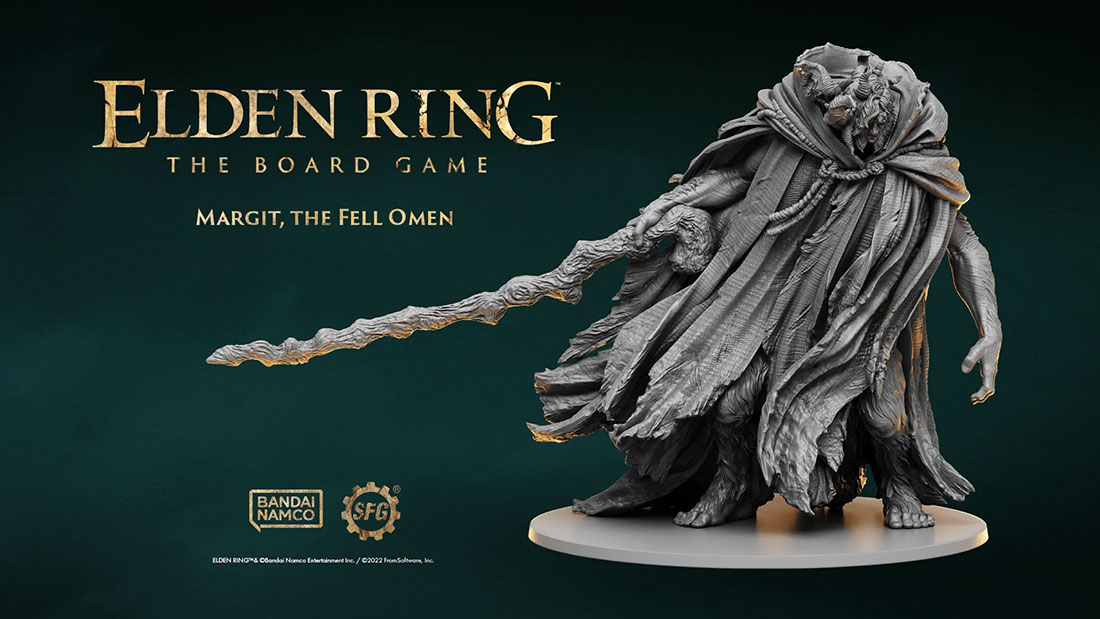
This design does make the game more balanced, as evidenced by my brother who helped me beat a campaign using only his Astrologer’s default staff and shield. He never once needed to change anything because to do so would only make it harder to create his long chains of sorceries which rely on Intelligence cards alone. I was playing as the Wretch character from the Limgrave Depths expansion, and I initially did feel weaker upon changing my starting club, simply because of the strict attribute requirements other weapons possessed. It is satisfying when your character build works — I was able to create a nifty defensive strategy using nothing but a parrying dagger and the Wretch’s bare fists! It worked well when combined with their ability to deal counterattack damage following successful parries; an ability which carried me to an enjoyable final boss encounter versus Margit, The Fell Omen.

Playing The Realm of the Grafted King with first level characters is more challenging and entertaining than Weeping Peninsula, which feels overly simplistic by comparison.
The concept of Elden Ring: The Board Game is similar to an old gamebook called Fabled Lands which likewise mimicked an open world framework in non-video game form. And it does sort of work here because while adventuring in one game box, players could, for example, run a few sessions from the Limgrave Depths expansion before returning to their regular campaign. Players who want to explore a different area of the Lands Between need only use the components from a different set if they want to slay new enemies or explore new environments, and this concept will presumably grow in scope as the publisher continues to release sets inspired by the many regions Elden Ring has to its name.
However, one niggle I see with the expansion scenarios is how they don’t reward players with runes. As I’ve said, equipment isn’t always useful, so while going rune free does prevent players from over levelling, it does skip out the best bits involving the character building I mentioned earlier. Conversely, if players complete the Weeping Peninsula campaign first and then move their characters into Realm of the Grafted King as the designers suggest, players will imbalance things anyway, as they’ll take a heap of runes and weapons with them to the next game.
Ultimately though, Elden Ring: The Board Game is more greatly spoiled by how fiddly it is. Each set comes in a huge box packed full of cards, with many of them kept in a strict order. There are cards you’re allowed to read and cards you’re not, and simply learning which dividers go where is a challenge. When a campaign is in progress, players need to handle multiple tokens, cards, character dashboards, and up to four duplicate encounter books on the table at one time, so it’s a nightmare to keep organised.
The encounter books are especially egregious. They feature combat grids offering a supposedly easy alternative to yet more tiles, but aside from some cosmetic differences, many of these grids are near identical copies of each other anyway. Dungeon and gauntlet encounters necessitate turning to the same page in each of the four different books before connecting them together, and exploration scenarios use them as well to add even more annoying set up time and take up even more space on the table.
Exploration encounters have their own problem with tokens because each map tile has several printed icons with a token to match. Players will spend considerable time finding the correct tokens (which are tiny), only for the exploring player to sometimes discard them with their very next action! There are also personalised quests to be tracked in the correct order, multiple card decks for resources, weather, and other trinkets which need shuffling, and the awkward tile stack players are expected to track and update between every scenario, not to mention the enemy cards with their specific letter designations. And then of course are the miniatures which you’ll spend more time setting up than actually playing with since many of the weaker ones often die before getting a turn. And if you do decide to use content from another set, good luck on determining which components go back into which box!
This constant hassle of setup severely harms the game’s enjoyment factor, and after running two full campaigns including numerous extras from the expansions, I didn’t find Elden Ring: The Board Game was enjoyable enough to make up for it. It’s a sometimes fun, sometimes flat experience offering a reasonably unique take on the cooperative genre, but it’s not worth its huge storage footprint or time commitment.
I commend Steamforged Games for trying to make a faithful and varied tabletop experience here, but Elden Ring: The Board Game is ultimately just too big for its level of depth, and is not the grand successor I hoped it would be.
Elden Ring: The Board Game at Steamforged Games »

Leave A Comment