

Culdcept The First
Of the many tragic failings inflicted on the Sega Saturn console, Sega’s mismanagement in software localisation ranks as one of the most egregious. While the format was well-supported by a colourful and extensive library of games in its home territory of Japan, Saturn owners in the rest of the world had nowhere near the same volume or quality of titles to choose from. Popular and influential games like Grandia, Radiant Silvergun, and Castlevania: Symphony of the Night were never released outside of Japan; a fact readers and editors alike would denounce in the pages of Official Sega Saturn Magazine month after month! So it’s great to see City Connection addressing some of those past wrongs with their modern re-releases of classic 32-bit titles. Their latest is Culdcept The First — a modern port of the original Culdcept released for the NTSC-J Sega Saturn in 1997.
Culdcept was just one of the many superior imports I only ever saw in magazine screenshots before European publishers finally accepted its potential many years later. Culdcept Revolt brought the franchise to Europe for the first time in 2016, and until Culdcept Begins releases later in 2026, Culdcept The First marks a decent debut for the franchise on PC. However, gamers should manage their expectations because Command & Conquer Remastered Collection this is not — don’t expect a sleek and bombastic reproduction of Culdcept here because this port is pretty basic.
Culdcept is best described as Magic: The Gathering meets Monopoly. It’s a digital roll and move board game where 2-4 players construct a spell book of cards representing the creatures who claim territory on the board, items which help creatures attack or defend territory, and spells bestowing various instant or ongoing effects tied to a wider strategy. Eventually one player will claim enough territory and collect enough tolls to satisfy the map’s mana threshold and be crowned the winner. Culdcept The First recaptures this concept exactly as it was in the 1997 original, with the addition of some enhancements to make the experience more palatable to a modern audience.
There are new rewind and quick save features allowing players to undo misclicks or mistaken moves with ease, and it means you can easily cheat in battles if you just want to experiment with the game’s mechanics. I’ve used rewind several times after miscalculating the attack values on my invading monsters or misread the correct direction to move my Cepter. This version also has Culdcept Revolt’s option of revealing every player’s hand of cards to eliminate aggravating guesswork. This essential feature still doesn’t let you inspect those hands to remind yourself of what the cards do, which aside from not being accessible, forces players to remember or reference card effects separately to achieve optimal play. Still, with the smaller card pool and aforementioned rewind features, players can recover from mistakes much easier than before.
These earlier Culdcept titles are grindy, so the presence of a reward pack allowing players to increase the number of cards received for completing a session is extremely welcome. The pace at which players unlock new cards is unfortunately still slow even with this setting turned on, so if players have an idea for a perfect book, they face a considerable grind before they can construct it. Because players are awarded useless duplicate cards with no way to sell or trade them for those missing, you can complete the entire campaign multiple times over and still not see a single copy of “Borgess” to compliment your would-be-so-great neutral creature book. (Not that I’m bitter!)
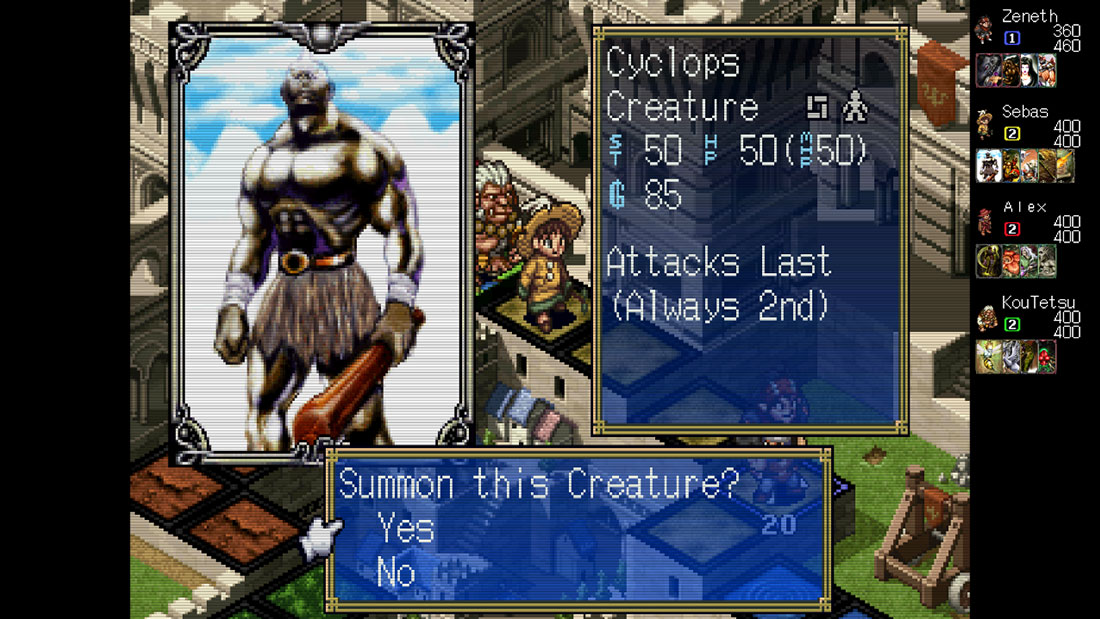
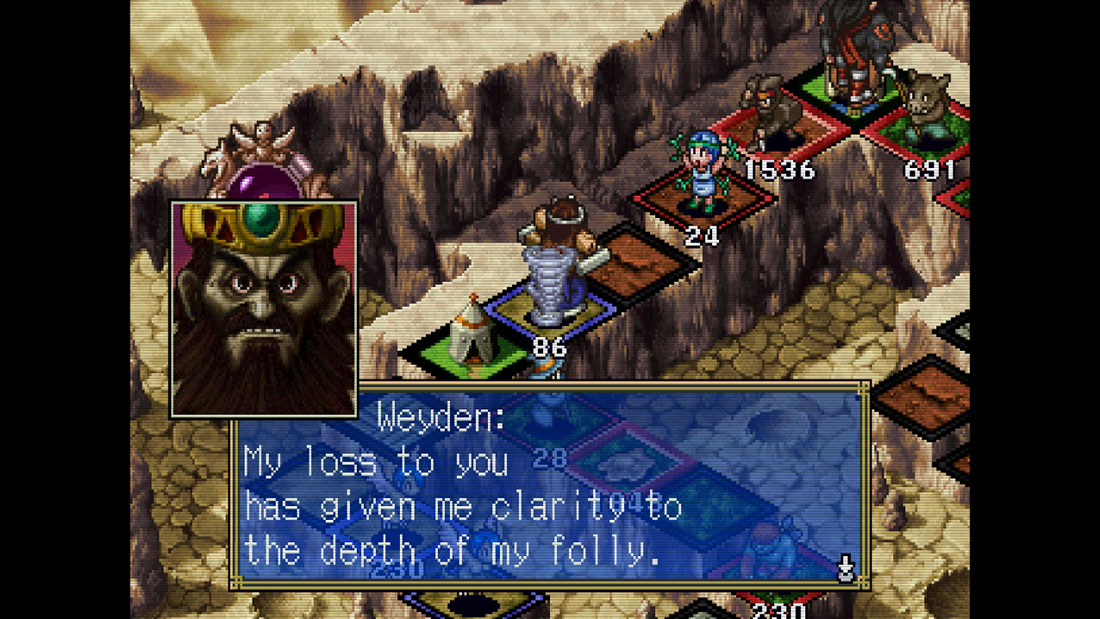
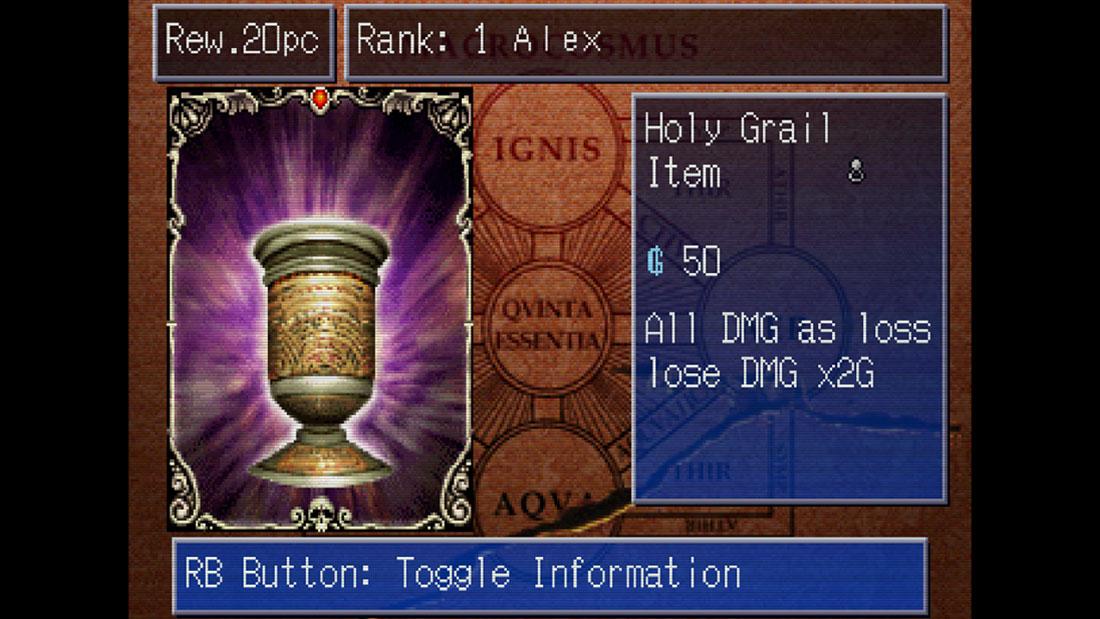
The English translation here is serviceable, but it still feels like you’re reading text from a 1997 CD-ROM game, with all the odd typos and weird naming conventions you might expect. Take the Moth Man creature being called “Mosman” or “Anubias” instead of “Anubis”. I assume these mistranslations are deliberate to maintain the authenticity of the original text, but there are times when a card ability can be overlooked or misunderstood because of dodgy wording. (SNK vs. Capcom: Card Fighter’s Clash suffered the same problem.)
The character dialogue is also rather kooky and tongue-in-cheek, but it does offer just the right amount of storytelling a game like this needs. Cutscenes are short, character traits are quickly distinguishable, and each map sets up a self-contained story of a rival Cepter generally being unpleasant before the player comes along and humbles them into admitting fault and changing their ways. (Excelsior!) Unlike Culdcept Revolt’s dire storytelling, the main campaign here is never overwrought or self-serious. Cepter personalities emerge organically from in-game banter instead of boring cutscenes, even if that one character does so with a wacky Irish accent for some reason…
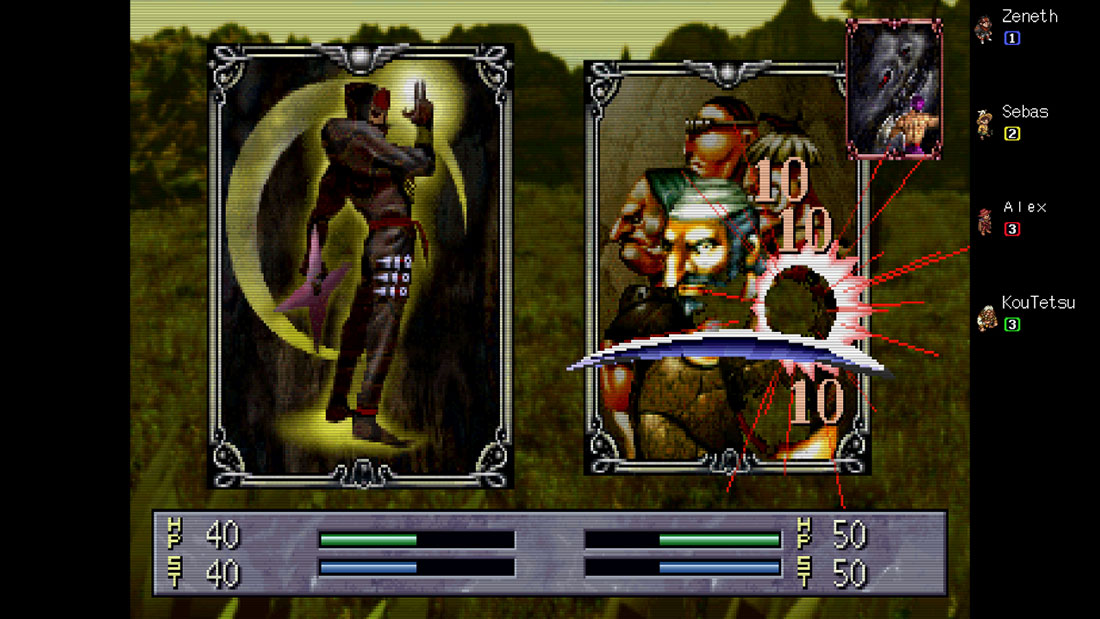
If the words sometimes falter, the art style does not. The attack animations hold up very well, as dead creatures collapse or disintegrate when hit by cool-looking 3D fists or laser beams. And of course there are some risqué card portraits — a few naked fire elementals and bondage scenes to hold up the usual Nineties CCG tropes! Nevertheless, Culdcept remains an effective showcase for Sega’s original vision of the Saturn’s crisp 2D output, and it retains that authentic presentation when played in full screen with the scan lines turned on.
The AI isn’t as clever as it is in newer iterations of Culdcept, though. The CPU doesn’t know how to move its creatures to claim empty land or how to invade a weakened neighbour, and they’ll often discard or fail to play useful cards timely. Part of the problem is the maximum hand size being extremely small. It limits tactical play and causes games to slow down as players struggle to find or hold onto what they need. The larger maps also have low land values and force players to walk many steps before receiving their mana stipend from the central castle. Players have to closely control their spending, but that can be difficult if they get hit by the unfair Mana Drain card which steals a generous percentage of mana from any unlucky player targetted by it. Pray your opponent isn’t running four copies of that thing in a 1v1 duel because you’re in for a miserable experience if they are!
Balancing gripes are to be expected in such an old game, but its card-based formula and 32-bit aesthetic has aged well regardless. Additionally, a competitive skirmish mode for 2-4 local players (or AI bots) offers some welcome replay value in the face of a short campaign and an overly easy list of achievements. With this being an emulated title, there are some problems with the sound, but credit to the developers who have already provided some updates to fix issues like this, as well as the previously annoying black screen glitch which you’d often get when playing on Steam Deck. Is it too much to hope remote play gets added next?
Culdcept The First isn’t a game for everyone, but it does have enough customisable enhancements to make it a good introduction to this unapologetically niche series, so be sure to try the free demo if you’ve never played it before. Speaking of which, how about remastering Dragon Force next?
Culdcept The First on Steam »

Leave A Comment