
Life is Strange: Reunion
Author Richard Yates felt cursed having written his most critically acclaimed novel (Revolutionary Road) first. He once talked about the pressure his early peak created, and lamented never again being able to match the immense standard of his debut effort. I imagine the Life is Strange creators have often felt this same pain, and following the dismal sales performance of 2024’s Life is Strange: Double Exposure, the franchise’s current developers (Deck Nine Games) must have felt pressured into thinking fan service and nostalgia was a safer bet for their latest sequel.
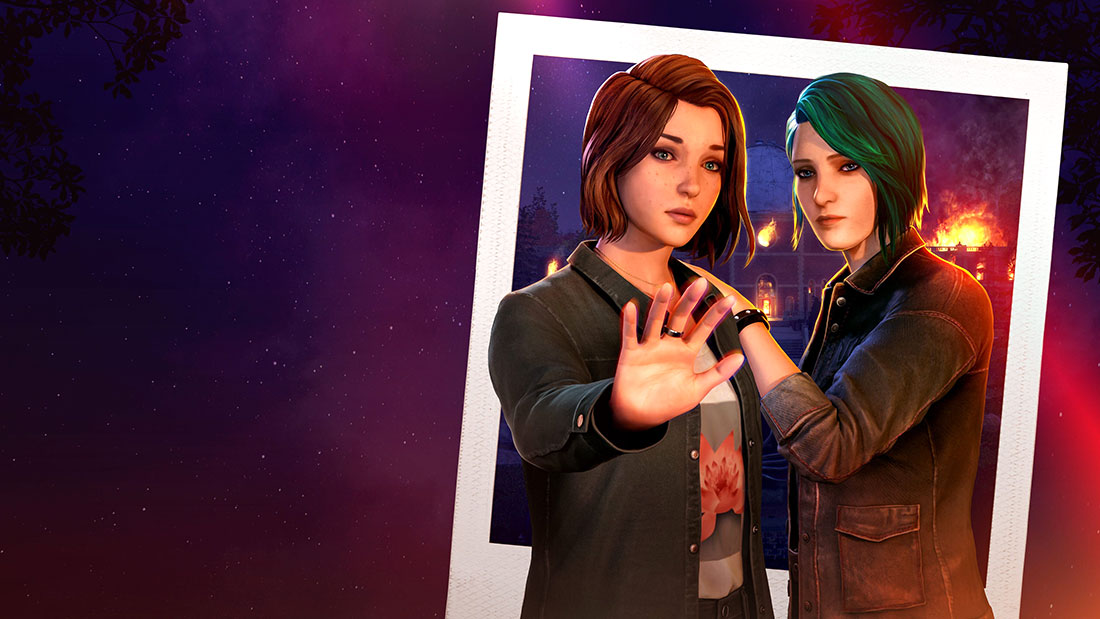
Life is Strange: Reunion immediately picks up with Maxine Caulfield returning to Vermont and finding Caledon University ablaze. Because Max can’t make a cup of coffee without warping the boundaries of time and space, she suddenly regains her time-altering powers (which were dormant in the previous game), and uses them to jump back a few days, so she can try to save her friends from a firey fate. Makes sense! But an unexpected wrinkle soon appears in Chloe Price — Maxine’s tragic friend from the first Life is Strange, who has returned to help Max as a fully playable side character.
Reintroducing Chloe Price is certainly a disruptive move. After all, the climactic events of Life is Strange famously involve players choosing between two endings which decide if Chloe lives or dies. Life is Strange: Reunion has to retcon some things to accommodate for both outcomes. Whatever fate you previously decided for her, the end result is the same: Chloe’s back and everyone, including Chloe herself, is questioning what it means.
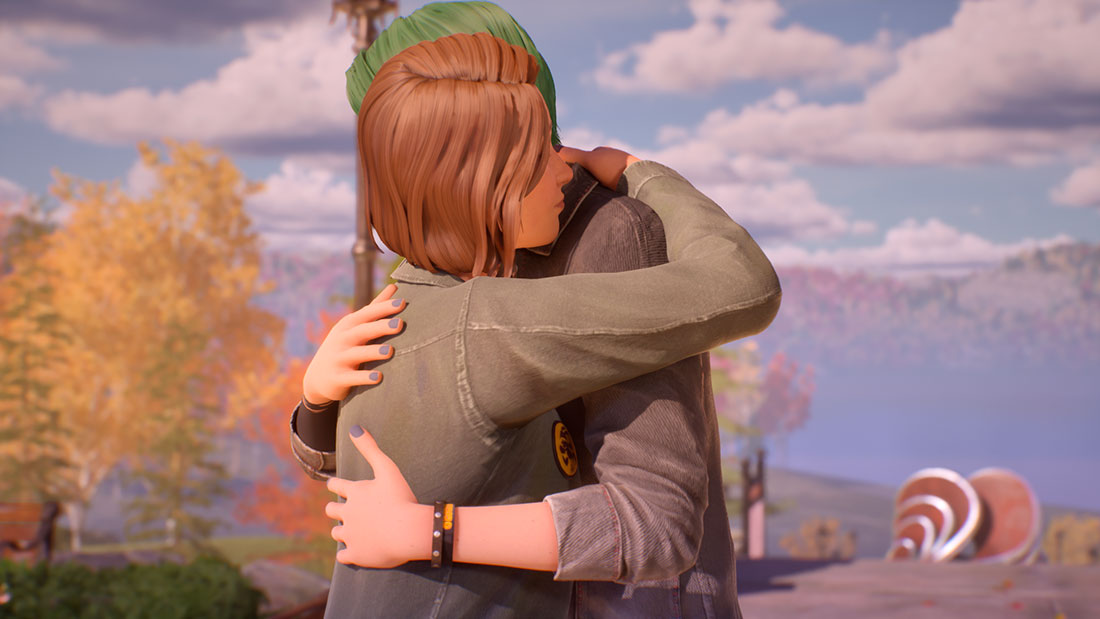
Bizarrely though, even with all the attention this twist is given early on, the wider story isn’t really about Chloe and even then, this is a much softer portrayal of the character lacking many of the aggravating lesser points that made her so tragically endearing in the first place. Too often does Chloe feel like a passenger in a plodding story about fires and protests, sprinkled with several opportunities for her and Max to smooch on camera. It’s pretty blatant fan service that sidesteps the potentially interesting reasons for why you might bring Chloe back in the first place: to witness a woman grappling with the uncertainty of merely existing in a reality which may not even be hers.
This theme is more relevant to the “previously dead” version of Chloe (players can customise their story with prior choices before the game begins), which is probably why it’s awkwardly downplayed, but limiting Chloe’s opportunities to talk about her place in this new world also limits the game’s effectiveness in generating spicy drama. It’s like in HBO’s Game of Thrones: Season 6 when someone asks John Snow what he saw in the time he was dead and he simply says, “Nothing”, in one of the most boring character beats ever conceived for television. Indeed, the plot is surprisingly unfocused on its characters, with the likes of Safi Llewelyn Fayyad — who cut a wonderful presence in Double Exposure — now drained of her relevance and relegated to a distant supporting role. When your story is less concerned with the motives of its primary characters and more concerned with the motives of some faceless nobody wanting to burn a school, you’ve got problems.
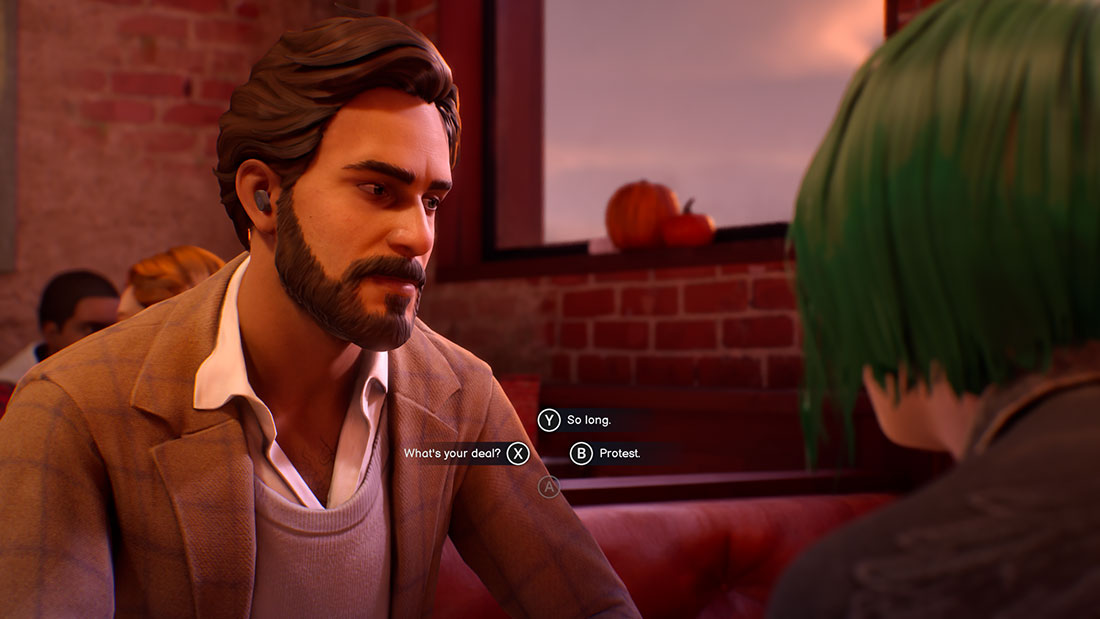
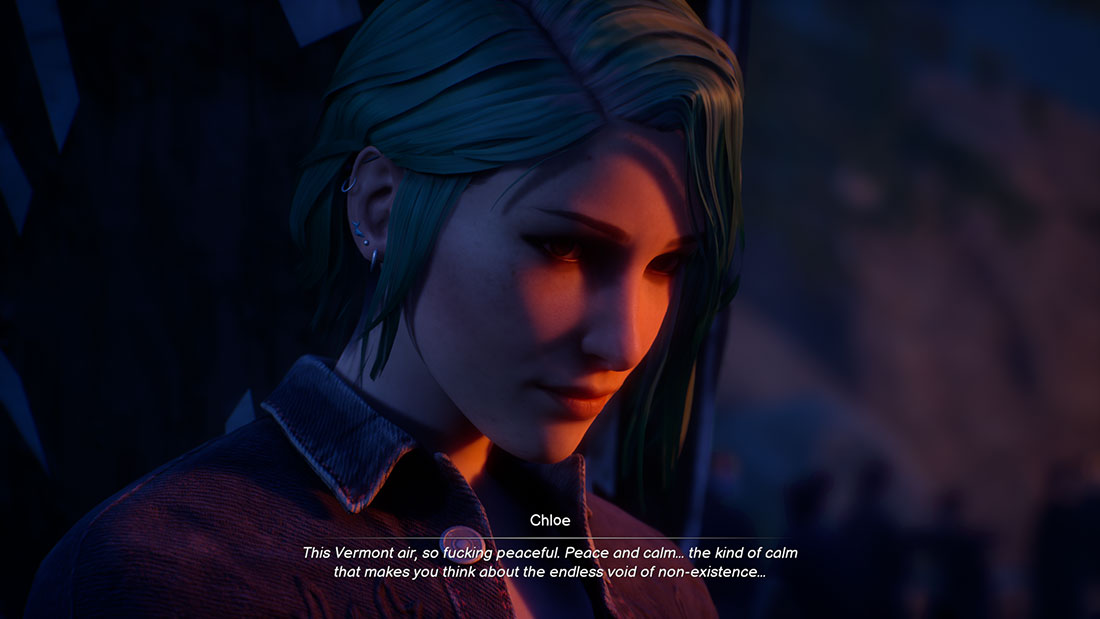

From a technical perspective, Life is Strange: Reunion looks good, but because the story is set in the same place as Double Exposure, the majority of locations and set pieces are reused to repetitive effect. The game also suffers from blurry shader graphics which are distracting when talking to characters up close, as many of them have a glitchy appearance around their hair strands. Likewise the lip syncing isn’t great, and while it was cool to see Max’s rewind power and Chloe’s backchat mechanic returning here, splitting the player’s role between two characters only made these mechanics feel underused by the end of what is a rather short story.
I had to keep an open mind about the direction Life is Strange: Reunion was taking because I disliked the idea of reintroducing Chloe Price to begin with. I’ll admit some of her interactions with the other characters here were fun: I like seeing her and Lucas trading barbs, for instance. Voice and motion capture artist Rhianna DeVries still fits the role beautifully, and even with the fan service elements, this is not the sort of amateurish material you might expect author Annie Proulx to receive from fans “fixing” the ending to Brokeback Mountain — it’s at least a respectfully considered retcon in that sense. But Chloe’s arc was perfect as it was; there was no need to mess with it. Life is Strange: Double Exposure had its faults, but it did well to create a compelling new arc for Maxine, with a major connection in the Safi character just begging to be explored further. Maybe that sequel will still come, but it leaves Life is Strange: Reunion feeling like an odd detour if so.
Is this a sentimental passion project, then? Or is it merely a cynical ploy to regain lapsed fans? As is often the case with these questions, I think the truth lies somewhere in between the extremes. Whatever the reason, this sudden focus on empty nostalgia did not make for a better game. Life is Strange: Reunion is a disappointingly flat chapter in Max’s next saga, and I can’t see this new direction being a panacea to the franchise’s dwindling fortunes.
Life is Strange: Reunion on Steam »

Leave A Comment