
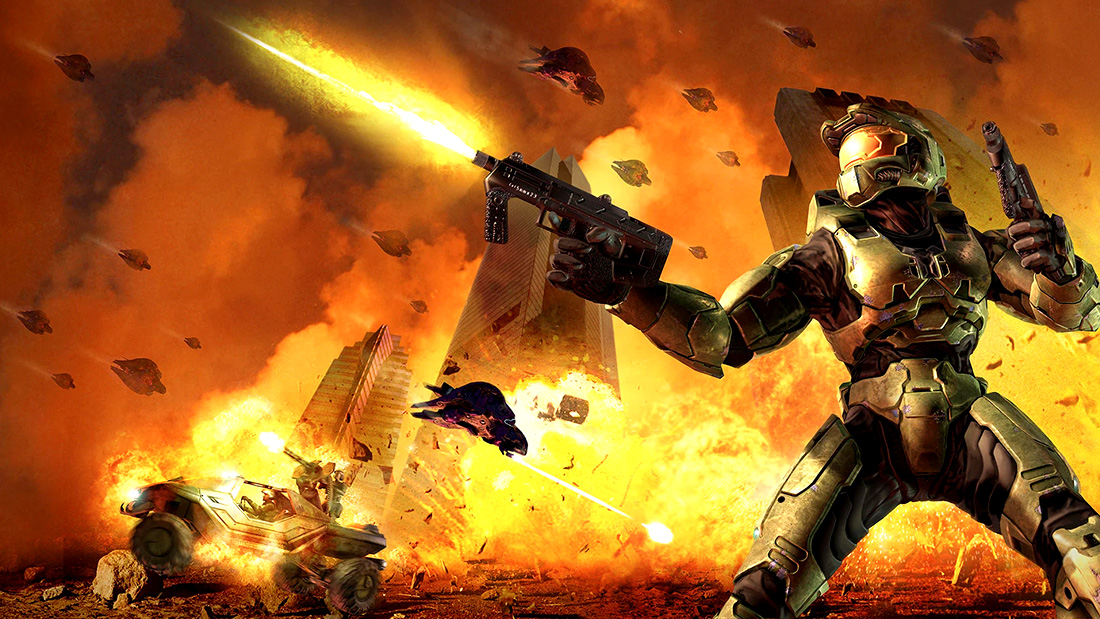
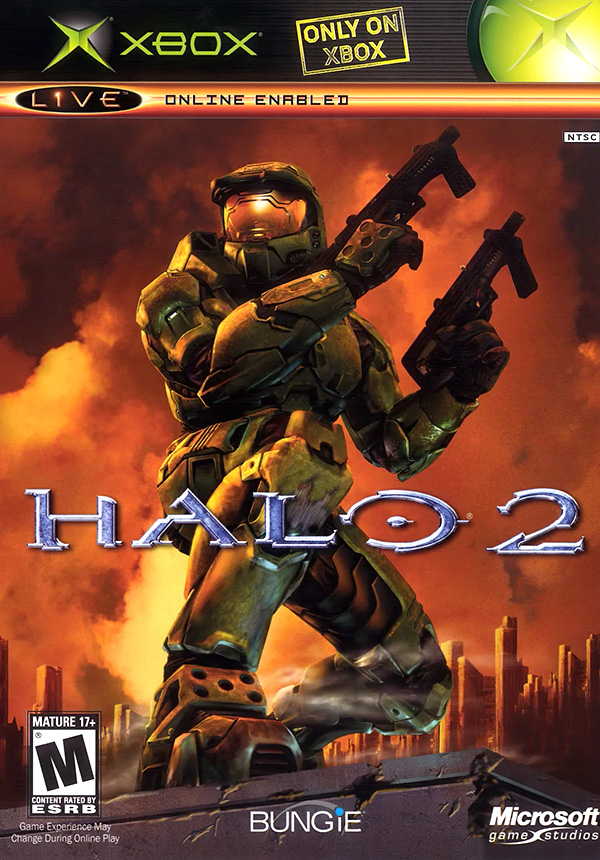
Halo 2
As I write this on 15 November 2026, the Xbox and Halo brands both turn 25 years old. Now, I’ve already written about Halo: Combat Evolved in episode #15 of this blog series, so it only feels right to celebrate the anniversary by revisiting its sequel, and the original Xbox’s biggest game ever, Halo 2.
It’s easy to forget how immense the hype was for Halo 2. Following its release, it became a lightning rod for debate over everything from its storyline and soundtrack to its game balance and cliffhanger ending. I’ll revisit these topics here, but nothing changes the fact that this particular video game was, and still is, very important for a number of reasons. It was in many ways a pillar of its generation, one which influenced how future video games were presented, advertised, and sold, whilst popularising a structure for online console gaming that remains the default model to this day.
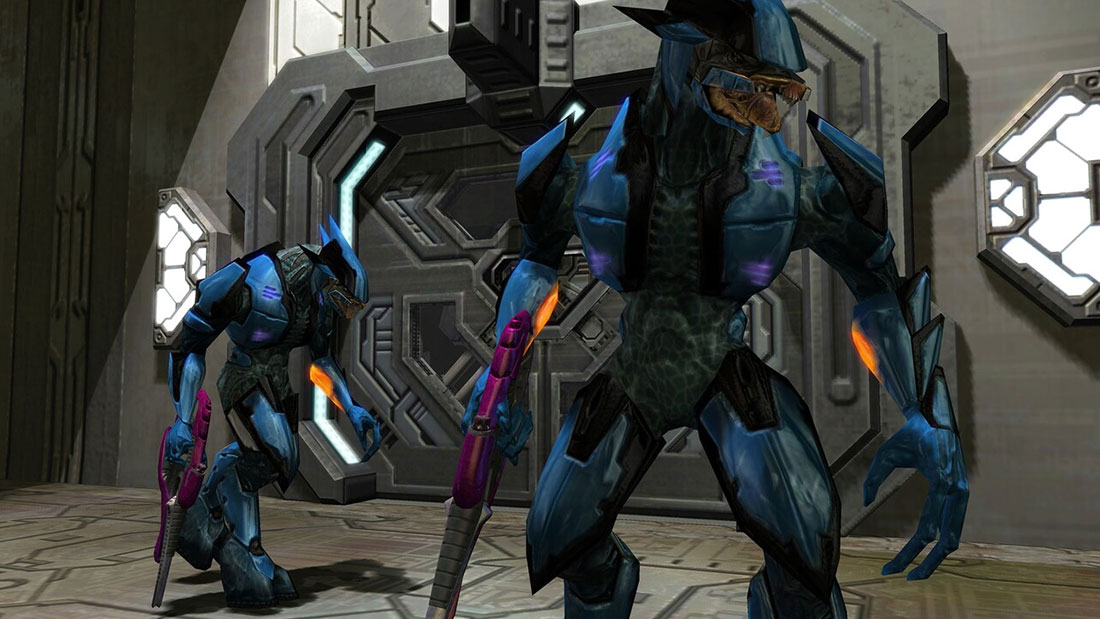
Halo 2 has a similar plot outline to its predecessor. It begins when the Covenant (zealous alien enemies of humanity) reach Earth with their interstellar forces. Everyone’s favourite cyborg super-soldier, the Master Chief, fights to repel the invasion, but the discovery of a second Halo installation once again threatens all sentient life in the galaxy. What makes things more interesting is the introduction of a new playable character called the Arbiter, a disgraced Covenant Elite who must ultimately fight against his own kind when the Covenant’s tenuous alliances begin to crumble.
While the character was controversial, the Arbiter’s place in the wider narrative is well considered. Players witness duelling perspectives as the campaign alternates between the Arbiter and the Master Chief from chapter to chapter. The narrative juxtaposes their different worlds: in one cutscene, the Master Chief is honoured with medals while the Arbiter is branded and shunned for failing to protect the first Halo ring. The Arbiter’s pariah-turned-holy-redeemer story arc is very different from what players had been used to, and its setup takes many long cutscenes to explain. Even so, it gives the Arbiter a sympathetic quality, transforming his race’s place in the story from villainous aliens to righteous allies. Halo 2’s approach to lore is undeniably heavier, then, but if you want to see where the franchise’s narrative identity was solidified, you need to start here.
It’s the Master Chief who owns the first stretch of the campaign. One forgotten set piece sees him fighting on the exterior of an orbital defence station, where the level geometry shifts between rounds of cannon fire. Once the Chief reaches Earth, players are treated to all the best “firsts” Halo 2 has to offer: the first hijacking of an enemy vehicle, the first sniper duel among the high-rises of Mombasa, and the scripted arrival of the first Warthog jeep, complete with AI drivers who suck at their job! When they’re not in vehicles, the AI marines are surprisingly capable squad mates, and the Earth-based maps they fight on are among the best the campaign has to offer.
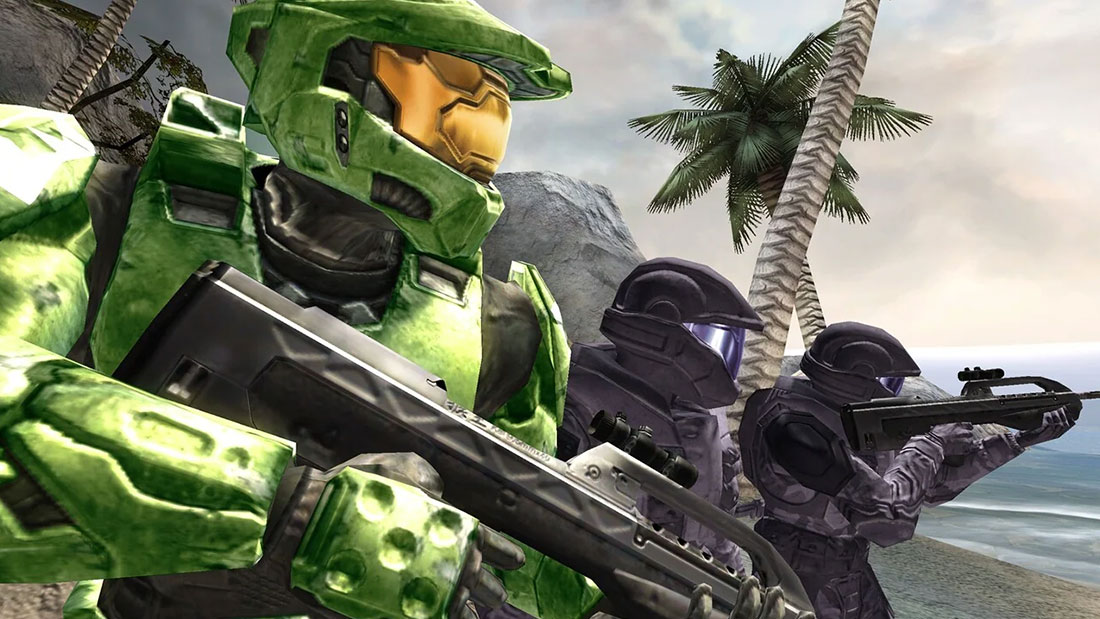
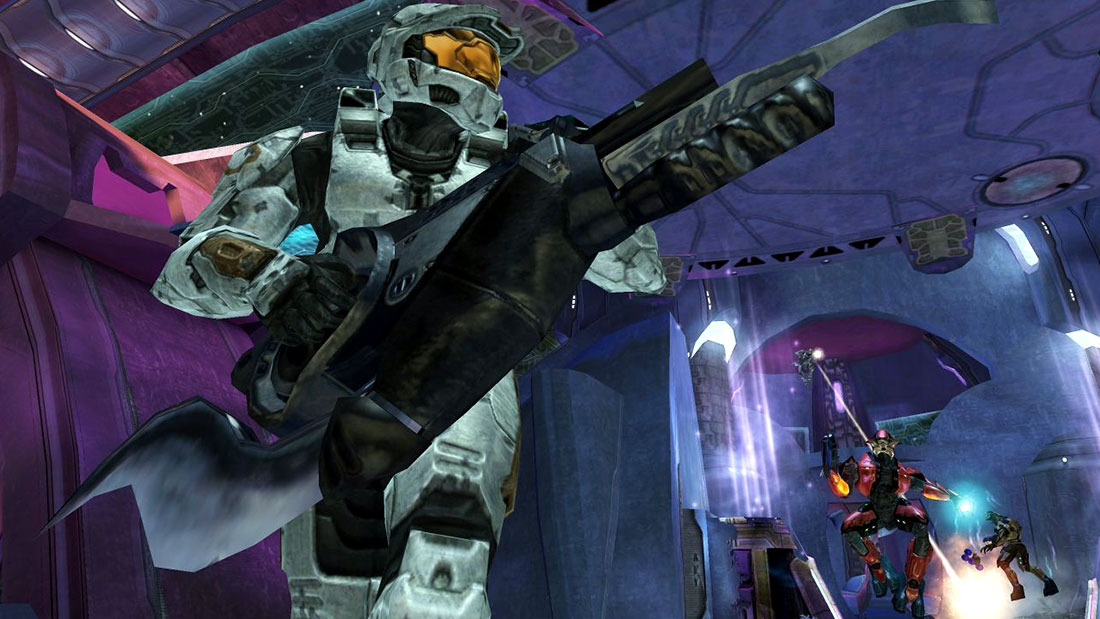
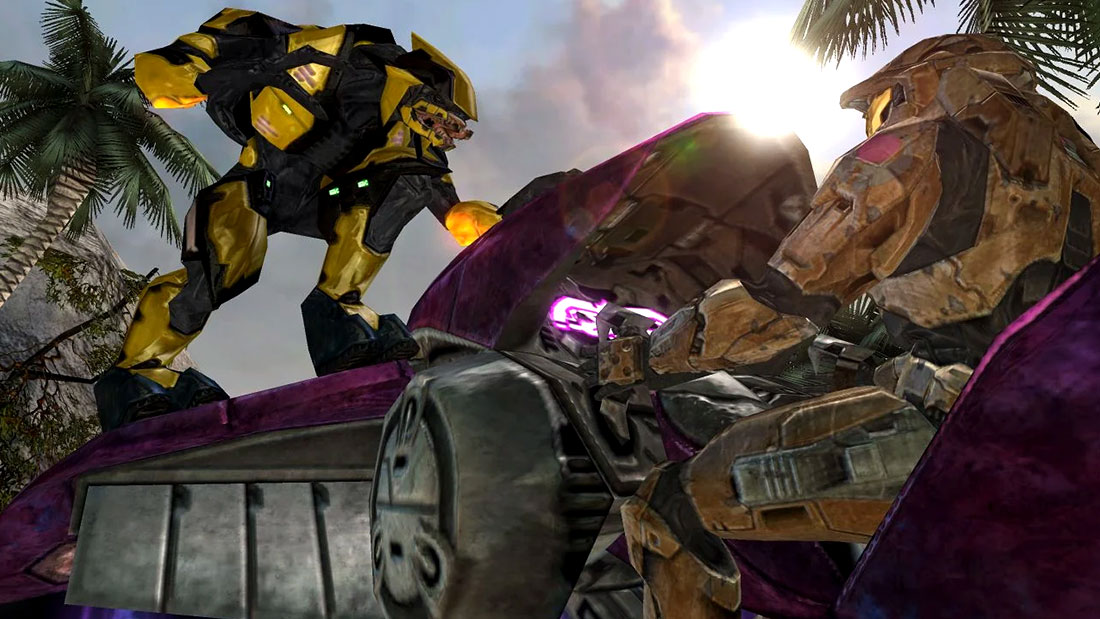
Even though the Xbox console struggles to render the full scope of Bungie’s vision, there’s no denying that Halo 2 is a gorgeous-looking game for its time. I recently replayed the entire campaign using Grimdoomer’s Halo 2 HD mod. When used on a modded Xbox with a RAM upgrade, this superb patch all but eliminates the game’s notorious texture pop-in, while also unlocking a proper widescreen mode, more split-screen options, and 720p output. In the years since Halo 2’s release, we have come to understand the human cost of its development, and how its visuals were overly ambitious, given that Bungie was also building a new game engine at the same time. Pushing the Xbox to its limits was certainly a noble artistic goal, but the compromises Bungie made to hit its deadline had a profound effect on other areas of the game, not least its map design.
The epic battle against the Covenant Scarab is a high point, and shortly afterwards, as the Arbiter levels begin, the campaign’s quality starts to decline. Bungie clearly wanted to take players to some wondrous places, and there are memorable moments along the way, such as a tranquil underwater lift ride and the furious drama of a plummeting mining station. Even so, the campaign maps are smaller and considerably more linear than those in Halo: Combat Evolved. There are many slow gondola rides, plenty of backtracking through repetitive rooms, and frequent one-way drops that force players down a single route. The Arbiter’s opening mission reintroduces the Banshee planes, which should have been a high-five-worthy moment. Instead, it’s spoiled by a dogfighting set piece that drags on far too long, with too many enemies and a jarring soundtrack by Incubus. (OK, that last point is entirely subjective, but come on!)
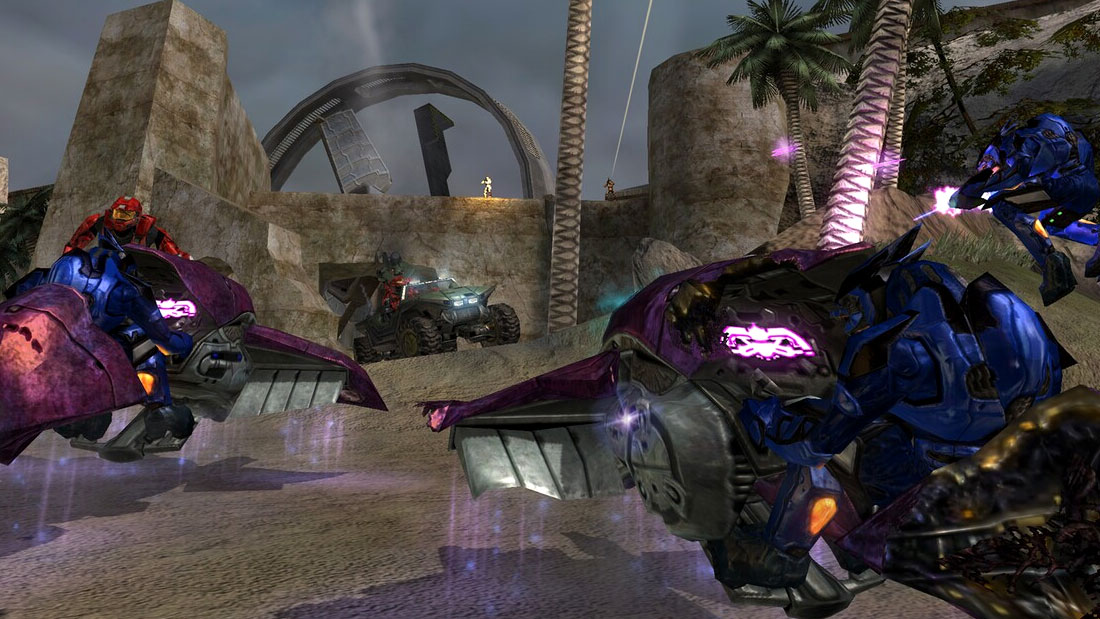
We rejoin the Master Chief later as he arrives at the second Halo ring. The “Delta Halo” mission features sandy beaches, blue skies, and hidden installations packed with enemy forces. At first it resembles “The Silent Cartographer” level from the original game, but it only creates the illusion of better things to come. Crushingly, this outdoor map is really just a series of narrow corridors wrapped in a pretty skybox. Invisible walls and tight canyons funnel you along a single path, where enemy vehicles spawn in front of your Scorpion tank like targets in a shooting gallery. Even the Orbital Drop Shock Troopers (ODSTs), who would go on to headline their own game in Halo 3: ODST, get stuck on an awkward cliff face here and die before doing anything useful.
The first Halo featured gorgeously spacious outdoor battlegrounds where multiple factions fought each other in enjoyably chaotic fashion. Players could be more creative in how they approached these skirmishes, and the gameplay loop was rarely less than magical. Halo 2’s claustrophobic maps lack that quality, and enemies more often spawn around players unexpectedly. As a result, I often found myself running past enemies altogether before leaping down yet another one-way drop to escape them. Whereas skipping enemy-infested rooms in the first game felt tactical, and even necessary when the zombie-like Flood were present, in Halo 2 I did it simply to spare myself the aggravation caused by its poor weapon balance.
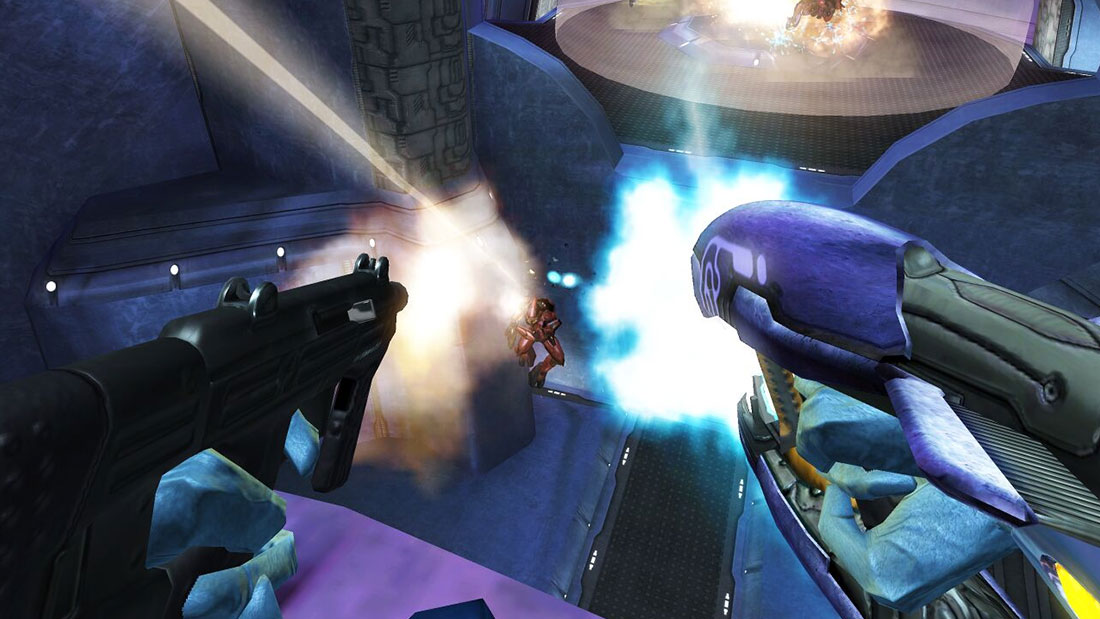
It’s vital to stress not every systemic change in Halo 2 is negative. The variety of new vehicles and their new damage physics are awesome additions, and the removal of medical kits in favour of automatically recharging health was a logical evolution of the regenerating shield feature Bungie had already pioneered. However, poor weapon balance hurts the game’s fun factor, especially at higher difficulties where the margin for error is much thinner. The new dual-wielding feature, for example, gives players more firepower at the cost of being able to throw grenades or land headshots easily. That would be fine, except that all one-handed weapons were weakened to account for the possibility of players holding two of them, so using a plasma rifle or pistol on its own is rarely a good idea. New weapons like the Brute Shot and Sentinel Beam are so weak there’s little point using them, and melee attacks feel similarly underpowered.
Grenades are also much weaker, to the point where sticking a plasma grenade to an enemy no longer guarantees a kill. The sniper rifle was an almost automatic pickup in the first game thanks to its long range and immense stopping power – spotting one always earned a quiet “Hell yeah” from me – but Halo 2’s abundance of tight corridors gives the weapon fewer chances to shine. The pistol has also been replaced by a Magnum lacking the all-purpose utility of the original sidearm. I found myself relying on the new energy sword for much of the campaign, simply because of its raw power and its reliability at killing enemies in a few swipes. The Arbiter, meanwhile, has built-in active camouflage offering near-invisibility. It’s a cool feature that should give his missions a distinctive edge. Unfortunately, weapon variety is lacking in his early chapters, and with so much backtracking in his levels, I once again found the camouflage better suited to running past enemies than fighting them.
Difficulty settings have a greater effect on the campaign than they did before, especially in co-op. Legendary went from being a thrilling ride in the first game to an interminable slog in Halo 2, with arguably the hardest and most painful bits coming right at the start. If either player dies on Legendary, the game instantly reloads the last checkpoint. Being unable to bring back a fallen partner made co-op far more frustrating at this level, and I’m sure many other players felt the same after being one-shotted by yet another goddamn Jackal sniper!
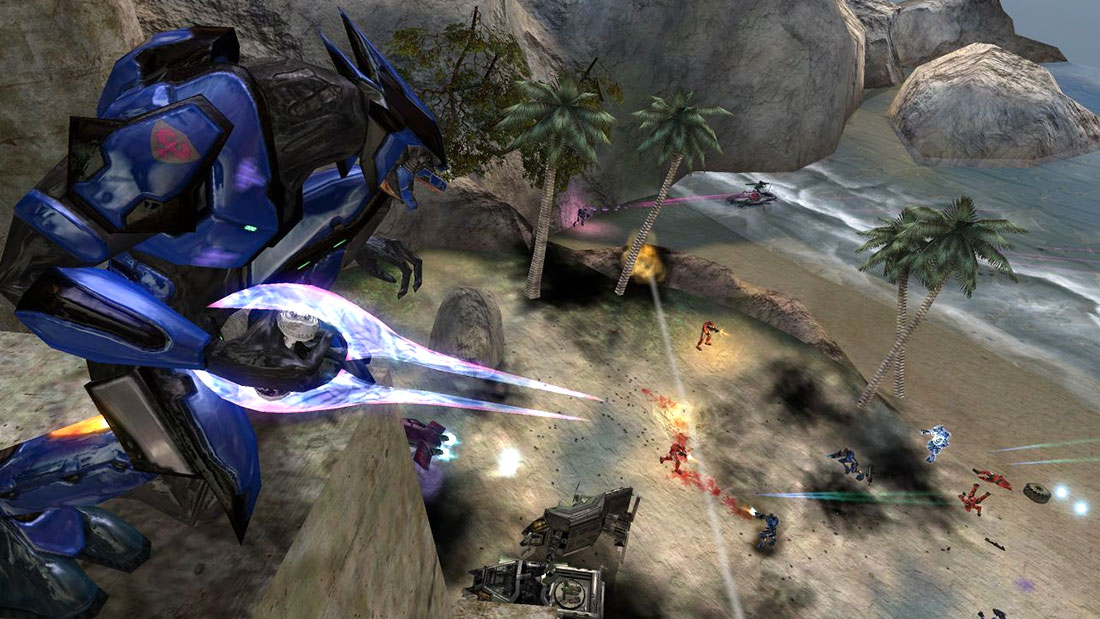
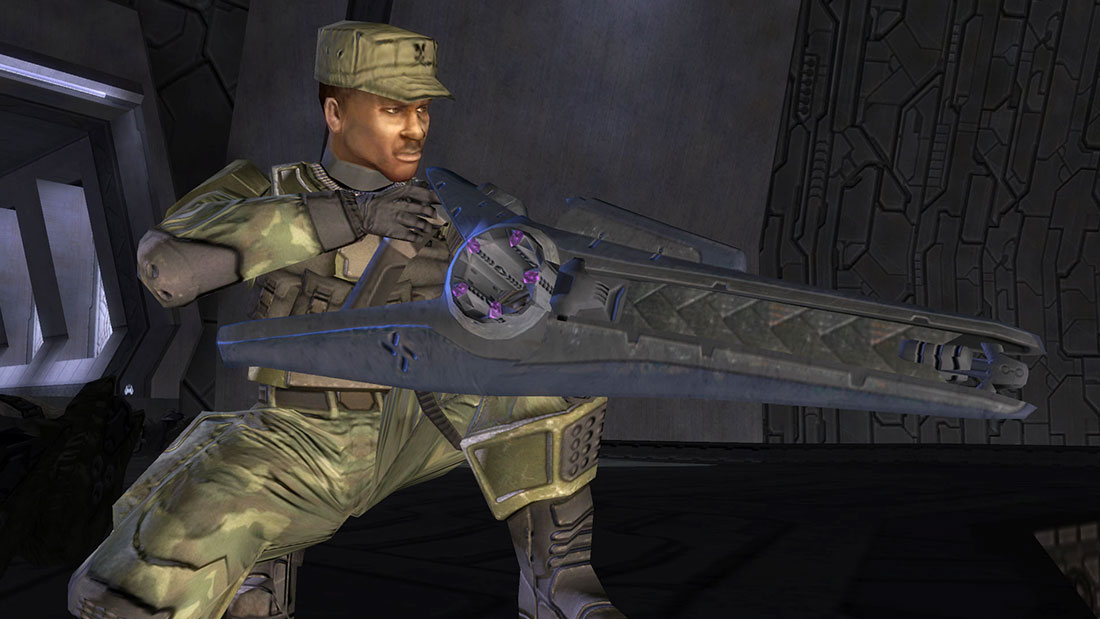
It’s from Delta Halo onwards where the plot loses originality, as Bungie’s dwindling development time forced it to cut the story short. The second half largely retreads the first game: another Halo ring, another outbreak of the Flood, another meeting with 343 Guilty Spark, and another race to secure the Index before the ring can be fired. “Not a very original plan,” Cortana remarks during one of the final missions. Tell me about it!
Shortly after that line, the Master Chief clears a frustrating room of Covenant baddies, boards another spaceship, and is never seen again in a playable capacity. Instead, the finale belongs to the Arbiter, who takes on the villainous Brute chieftain Tartarus in a rare Halo boss battle. The Master Chief reappears in one final cutscene to deliver his famous ‘finishing this fight’ line before the bewildered player is sent to the credits wondering what just happened.
For many players, the campaign mode is the heart of any Halo game, so Halo 2’s shortcomings in this area were a big disappointment at the time. But the game made its mark in ways few games of its era ever did, and in the end, even its flaws turned out to be a net positive. Bungie overhauled its internal processes following the bitter crunch its team went through making the game, and it used player feedback to address problems in the online mode through title updates released over Xbox Live. Beyond the game itself, its marketing broke new ground too: the Limited Collector’s Edition, with its metal case and bonus DVD, helped make premium editions a mainstream console purchase (I still remember paying a £5 deposit for mine), while the ilovebees alternate reality game brought a new kind of viral marketing to a mass audience. Perhaps most crucially, the Master Chief’s closing line became less of a meme and more of a rallying cry, inspiring the memorable “Finish the Fight” tagline for Halo 3. It may seem a bizarre comparison, but look at how WWE wrestler Cody Rhodes echoed the phrase in his highly successful “Finish the Story” arc, culminating at WrestleMania XL in 2024. Twenty years after the Master Chief first spoke those words, the sentiment still resonated with audiences beyond gaming.
The most significant reason Halo 2 prevailed, though, was its excellent multiplayer mode. Its dedicated development team, less constrained than the campaign team, had the time and resources to achieve exceptional results. These online features are worthy of their own article, but if you consider the integration of player profiles, cosmetics, and the aforementioned title updates that added a live service element, alongside truly innovative features like competitive matchmaking and party-based lobbies, it’s clear that Bungie set the standard for what online console gaming has looked like ever since.
Halo 2’s truncated ending, and even the famous E3 2003 demo, much of which never made the final release, make clear that this was not the game Bungie set out to make. But its legacy was never confined to its campaign, and its achievement reached well beyond the console it was released on. It turned paid Xbox Live subscriptions from an experiment into a proven business model, and shaped Microsoft’s entire strategy for its most successful console ever, the Xbox 360. Halo 2’s importance, then, lies less in what it did for the original Xbox and more in how it shaped an industry. After all, more than twenty years later, we’re still playing, and making, games built on its foundations.

Leave A Comment