

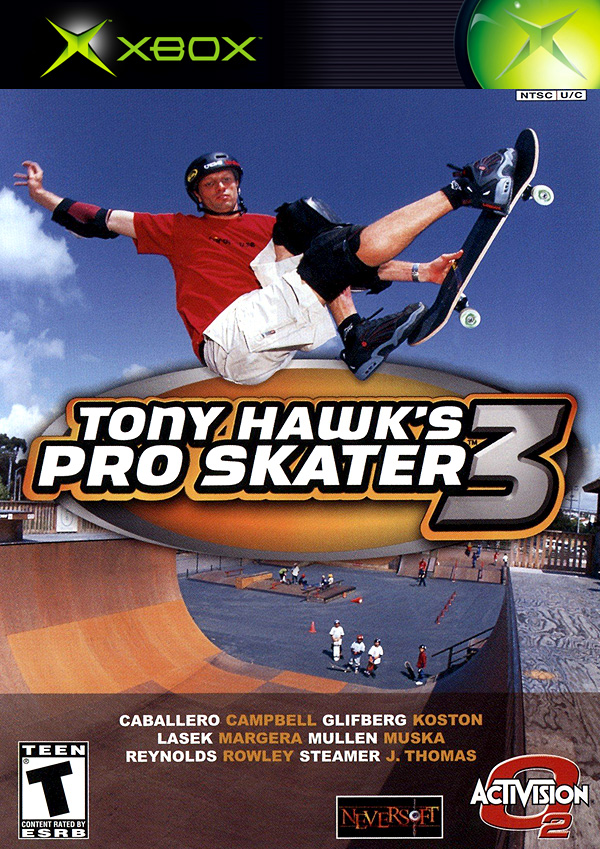
Tony Hawk’s Pro Skater 3
Tony Hawk’s Pro Skater was a bona fide cultural phenomenon in the early 2000s. What started as an arcade-y skateboarding game with punk sensibilities and celebrity endorsement, became a trendsetting juggernaut spawning a whole subgenre of extreme sports video games built on the same addictive mix of score-attacking gameplay and loud music.
Tony Hawk’s Pro Skater 3 was continuing the narrative of a franchise that could do no wrong. It quickly established itself as another classic entry, scoring overwhelmingly positive review scores, and it still remains the only sports game ever to achieve a game of the year award from Metacritic. (It was also the final officially released game for Nintendo 64.)
The formula that made the series so immediately playable remains intact. Once you’ve selected a skateboarder, you’ll enter one of several 3D maps featuring a list of goals to complete. The evergreen scoring goals are still present alongside others which ask players to locate items scattered about the level, reach hidden locations, and trigger scripted events (one of which includes a damn earthquake!).
It’s an exaggerated simulation of real skateboarding, then. When aiming for points, players have two minutes to execute as many gravity-defying tricks as they can. What made Tony Hawk’s Pro Skater 3 such a leap forward here was the revert system allowing players to spin their board upon landing from a ramp to link together more point-scoring tricks than ever before. This one change unlocked the game’s full potential, as players could now chain together flips, grabs, and grinds in ways that weren’t possible in the previous two games. While this mechanic made scoring more complex, it also made every level more nuanced and multi dimensional — a worthy trade-off.
And from the Foundry to the Cruise Ship, each map is interactive, well-designed, and fun to skate, with their nine goals creating a punchy structure for the Career mode. The skate park tournaments are even simpler — asking players to instead achieve the highest average score they can over three runs as they compete for a coveted gold medal. So while Tony Hawk’s Pro Skater 3 wasn’t the most realistic simulation, it hadn’t lost any of its love for real skateboarding competition and culture.
While there is repetition in completing every level for every skater (with only gentle remixing of goals and collectable placement), a wealth of unlockable extras make the grind (pun intended) an enjoyable one. Players can unlock biographical movies for the playable pro skaters, extra maps, quirky cheat codes, and because publisher Activision held certain IP rights at the time, players can even unlock Darth Maul and Wolverine as playable skaters.
The compact and detailed maps are complimented by improved character models and animation. Tony Hawk’s Pro Skater 3 represented a graphical leap over previous games in the series, and such a high level of presentation extended to a wealth of options and game modes, including tutorials narrated by Tony Hawk himself.
The custom skater mode benefits not only from the graphical facelift, but also from more dressy creation parts and the ability to create female skaters. The park editor also returns here, though I don’t recall much changing about that aside from the reduction in pre-made kits. My guess is there may not have been enough budget or memory to expand this feature further, but overall it’s still an amazing tool. Between Tony Hawk’s and TimeSplitters 2 — you could definitely see how player creativity was a priority for console game designers around this time.
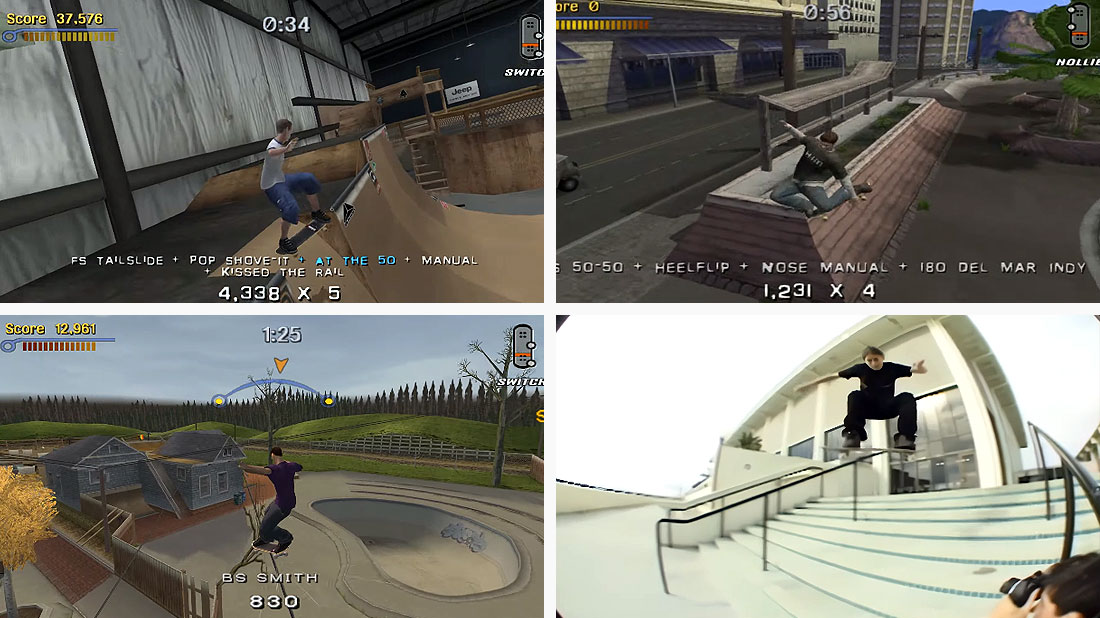
Every map features 3D pedestrians who will wander around and comment on your performance if you skate near them. Even here in a skateboarding game can you see the impact Grand Theft Auto III’s influence was having on the industry.
Even though it’s well presented, Tony Hawk’s Pro Skater 3 still feels adolescent at times, with its objectifying portrayals of women and occasional doses of Jackass-era humour being so emblematic of the awkward stage video games went through during the early 2000s. Also, while the series continues to feature licensed music, the limited 20-cut soundtrack gets repetitive quickly. Thankfully, the Xbox version supports custom soundtracks alongside the standard playlist editor and ambient options to keep things sounding fresh.
The Xbox version also has the beloved 2-player split-screen modes while adding system link support for up to four players as well. There’s no online mode, but a higher frame rate and some other perks (including a bonus map set on an oil rig) make up for it.
Overall, Tony Hawk’s Pro Skater 3 leaves behind a tremendous legacy, with some players like myself considering it the franchise’s peak. The gameplay still feels great, with the run-based formula encouraging repeat plays mere moments after one run ends. The urge to get right back in and go again, whether it’s to clear more goals, find more stat points, or just skate is always so strong because of how naturally playable and feature-stacked the overall production is.
As much as I adored playing this during the time though, my fondness for Tony Hawk’s would sadly decline from here.
But that is a story for… Actually, you know what? Let’s do Tony Hawk’s Pro Skater 4 right now!

Leave A Comment